A Blockchain Explainer
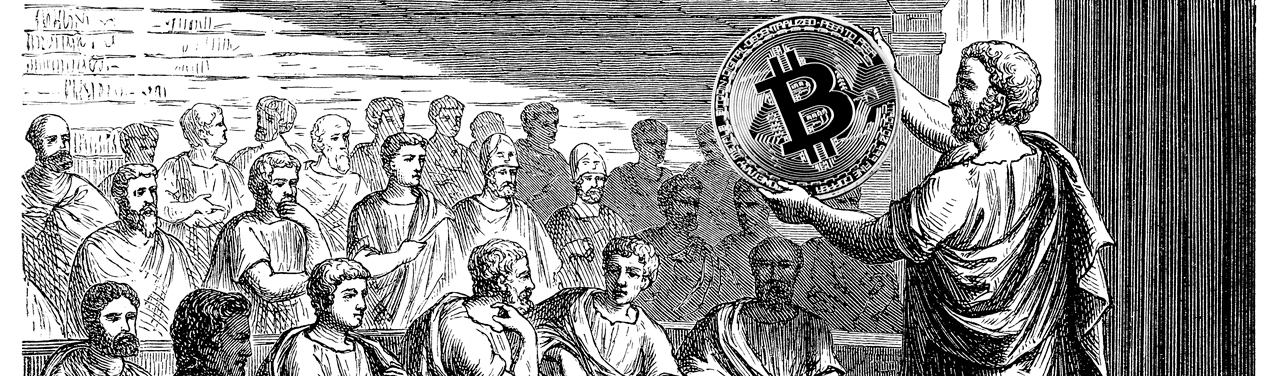
"It’s easy to become enchanted with the dizzying profits being made with
BitCoin, and with the elegance of the mathematics beneath it. But it’s
dangerous to forget that the point of these systems is to bring the
political power of common knowledge into the Internet age, together with
all of its potential for disruption and conflict"
LINK
Via: Nautilus
h/t
Showing posts with label Used Cars. Show all posts
Thursday, December 14, 2017
Monday, November 27, 2017
What If Consciousness Doesn't Drive the Mind?
It’s easy to assume that these contents of consciousness are somehow
chosen, caused or controlled by our personal awareness – after all,
thoughts don’t exist until until we think them. But in a new research paper in Frontiers of Psychology, Peter Halligan & David A Oakley argue that this is a mistake.
They suggest that our personal awareness does not create, cause or choose our beliefs, feelings or perceptions. Instead, the contents of consciousness are generated “behind the scenes” by fast, efficient, non-conscious systems in our brains. All this happens without any interference from our personal awareness, which sits passively in the passenger seat while these processes occur.
Put simply, we don’t consciously choose our thoughts or our feelings – we become aware of them.
LINK
Via: Real Clear Science
They suggest that our personal awareness does not create, cause or choose our beliefs, feelings or perceptions. Instead, the contents of consciousness are generated “behind the scenes” by fast, efficient, non-conscious systems in our brains. All this happens without any interference from our personal awareness, which sits passively in the passenger seat while these processes occur.
Put simply, we don’t consciously choose our thoughts or our feelings – we become aware of them.
LINK
Via: Real Clear Science
Tuesday, November 21, 2017
The Serial-Killer Detector
"Thomas Hargrove is a homicide archivist. For the past seven years, he has
been collecting municipal records of murders, and he now has the
largest catalogue of killings in the country—751,785 murders carried out
since 1976, which is roughly twenty-seven thousand more than appear in
F.B.I. files. States are supposed to report murders to the Department of
Justice, but some report inaccurately, or fail to report altogether,
and Hargrove has sued some of these states to obtain their records.
Using computer code he wrote, he searches his archive for statistical
anomalies among the more ordinary murders resulting from lovers’
triangles, gang fights, robberies, or brawls. Each year, about five
thousand people kill someone and don’t get caught, and a percentage of
these men and women have undoubtedly killed more than once. Hargrove
intends to find them with his code, which he sometimes calls a
serial-killer detector."
LINK
Via: The New Yorker
LINK
Via: The New Yorker
Friday, November 17, 2017
The Hidden Science and Tech of the Byzantine Empire
Byzantium was a pragmatic and down-to-earth culture—it developed
sophisticated systems for taxation, justice, administration, and
military deployment—and it also exhibited prowess in science and
technology. In his new book, A Cabinet of Byzantine Curiosities: Strange Tales and Surprising Facts from History’s Most Orthodox Empire, Anthony Kaldellis aims to capture this side of the Byzantines.
Byzantine military inventors perfected Greek Fire, a combustible liquid like napalm that could be hurled at enemy ships (or lobbed against land armies as hand grenades); a Byzantine philosopher made two synchronized clocks, placing one at the frontier and one in the capital, so that messages could be sent across Asia Minor via a network of fire signals, each message keyed to the time of day or night that it was sent; and Byzantine theologians included ancient Greek science within the basic curriculum of learning that aspiring religious thinkers had to master.
Follow the link to read about six notable successes (and failures) of Byzantine science and engineering.
LINK
Via: Nautius
Byzantine military inventors perfected Greek Fire, a combustible liquid like napalm that could be hurled at enemy ships (or lobbed against land armies as hand grenades); a Byzantine philosopher made two synchronized clocks, placing one at the frontier and one in the capital, so that messages could be sent across Asia Minor via a network of fire signals, each message keyed to the time of day or night that it was sent; and Byzantine theologians included ancient Greek science within the basic curriculum of learning that aspiring religious thinkers had to master.
Follow the link to read about six notable successes (and failures) of Byzantine science and engineering.
LINK
Via: Nautius
Friday, October 27, 2017
Fright Fest: The Science Behind Why We Love to Be Scared
Every week of the year, in rural Summertown, Tennessee, not too far from
Nashville, retired Navy man Russ McKamey terrorizes people. McKamey Manor
is a haunted house, but it's nothing you'd send your kid to for
Halloween. It's billed to interested parties as "live your own horror
movie."
Taking pleasure in fear is actually quite normal, it turns out. According to Kate Brownlowe, neuropsychiatrist and section chief of neurobehavioral health in the department of neurology and psychology at The Ohio State University Wexner Medical Center, being afraid is essential to human survival. "On an evolutionary basis, people who had a good fear response to things that were dangerous were far more likely to survive in the wild," she tells Mental Floss.
LINK
Via: Mental Floss
Taking pleasure in fear is actually quite normal, it turns out. According to Kate Brownlowe, neuropsychiatrist and section chief of neurobehavioral health in the department of neurology and psychology at The Ohio State University Wexner Medical Center, being afraid is essential to human survival. "On an evolutionary basis, people who had a good fear response to things that were dangerous were far more likely to survive in the wild," she tells Mental Floss.
LINK
Via: Mental Floss
Wednesday, October 25, 2017
The IQ test has a dark history
"Since its invention, the IQ test has generated strong arguments in
support of and against its use. Both sides are focused on the
communities that have been negatively impacted in the past by the use of
intelligence tests for eugenic purposes.
The use of IQ tests in a range of settings, and the continued disagreement over their validity and even morality, highlights not only the immense value society places on intelligence — but also our desire to understand and measure it."
LINK
Via: The Week
The use of IQ tests in a range of settings, and the continued disagreement over their validity and even morality, highlights not only the immense value society places on intelligence — but also our desire to understand and measure it."
LINK
Via: The Week
Monday, October 23, 2017
What Happened at Nikola Tesla's Secret Experimental Station?
Tesla claimed that he could transmit electric power abundantly and cheaply anywhere on the planet but there is little to no evidence that Tesla succeeded, not even in his own meticulous notes.
LINK
Via: Real Clear Science
LINK
Via: Real Clear Science
Thursday, October 19, 2017
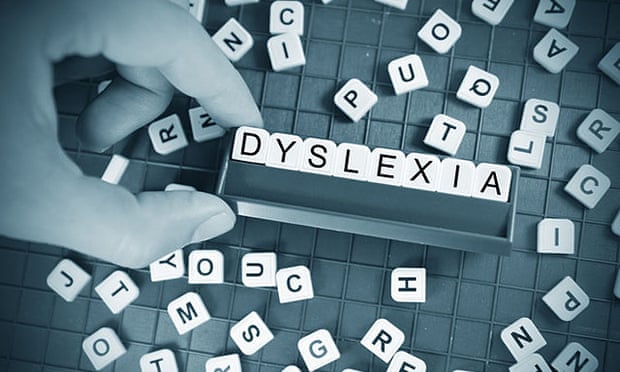
Scientists may have found the root cause of Dyslexia and a way to treat it
According to a new study published in Proceedings of the Royal Society B, the so-called learning disability may actually start in the eyes.
Via: theguardian
Wednesday, October 18, 2017
Automakers Plan Electric Car Blitz as Tesla Burns Billions
Here are two facts that defy logic: By the end of the year, electric-car maker Tesla Inc.
will have burned through more than $10 billion without ever having made
10 cents. Yet companies around the world are lining up to compete with
it.
LINK
Via:Bloomberg
LINK
Via:Bloomberg
Tuesday, October 17, 2017
If the Universe Is Expanding, What Does It Expand Into?
Friday, April 15, 2011
What Happens to a Donor’s DNA in a Blood Transfusion?
Reader Cathy wrote in wondering what becomes of a donor’s DNA once it gets inside another person during a blood transfusion.
Most of the time, the answer is nothing, because the donor’s DNA never makes the trip to a new home.
LINK
Via: Mental Floss
Tuesday, April 12, 2011
When the Blind Can Suddenly See, Do They Know What They’re Looking At?
In a new study published online by Nature Neuroscience, patients who had been blind since birth underwent sight-restoring surgeries as children or adolescent. In the day or two following surgery, patients seemed unable to match what they felt with their hands with what they saw, the researchers found, but a week later, they could.
LINK
Via: Discover Magazine
Tuesday, March 29, 2011
How Great Entrepreneurs Think
Think inside the (restless, curious, eager) minds of highly accomplished company builders.
Saras Sarasvathy, a professor at the University of Virginia's Darden School of Business, set out to determine how expert entrepreneurs think, with the goal of transferring that knowledge to aspiring founders.
Sarasvathy concluded that master entrepreneurs rely on what she calls effectual reasoning. Brilliant improvisers, the entrepreneurs don't start out with concrete goals.
By contrast, corporate executives—those in the study group were also enormously successful in their chosen field—use causal reasoning. They set a goal and diligently seek the best ways to achieve it.
LINK
Via: INK.com
Thursday, March 24, 2011
Tools Suggest Earlier Human Arrival in America
Clovis people weren't the first in America.
For many years, scientists have thought that the first Americans came here from Asia 13,000 years ago, during the last ice age, probably by way of the Bering Strait. They were known as the Clovis people, after the town in New Mexico where their finely wrought spear points were first discovered in 1929.
But in more recent years, archaeologists have found more and more traces of even earlier people with a less refined technology inhabiting North America and spreading as far south as Chile.
And now clinching evidence in the mystery of the early peopling of America — Clovis or pre-Clovis?
LINK
Via: NY Times
Wednesday, February 23, 2011
Skull in Underwater Cave May Be Earliest Trace of First Americans
Explorers have discovered what might be the oldest evidence of humans in the Americas.
Alex Alvarez, Franco Attolini, and Alberto (Beto) Nava are members of PET (Projecto Espeleológico de Tulum), an organization that specializes in the exploration and survey of underwater caves on the Yucatan Peninsula in Mexico.
Alex, Franco and Beto have surveyed tens of thousands of feet of mazelike cave passages in the state of Quintana Roo. The team's relatively recent explorations of a large pit named Hoyo Negro (Black Hole, in Spanish), deep within a flooded cave, resulted in their breathtaking and once-in-a-lifetime discovery of the remains of an Ice Age mastodon and a human skull at the very bottom of the black abyss.
LINK
Via: National Geographic
Friday, February 18, 2011
British cave yields ice-age skull cups
Ice age Britons drank from human skulls and may even have eaten flesh and bone marrow, but they were far from barbarians.
LINK
Via: PhysOrg.com
Tuesday, January 4, 2011
Five Shocking Facts About What Drinking Does to Your Body
On one day liquor’s making you fat (so many calories!), the next it’s keeping you thin (drinkers eat less dessert!). It may be causing your depression or it could be your biggest stress buster. For the longest time conventional wisdom seemed to say that it all came back to moderation. But then this past August a new study blew the lid off of that theory too, concluding that even heavy drinkers outlive non-drinkers.
LINK
Via: Good
LINK
Via: Good
Thursday, October 7, 2010
The Psychology of Conspiracy Theories
In case you haven’t noticed, this site is currently being bombarded by a certain strand of conspiracy theorist. I’m still not entirely sure what these people believe in, apart from being absolutely certain that the government is developing brain-eating vaccines, spiking the water with lithium and trying to subdue the population with “reactive” medicine. While it’s always sad to see so much angry ignorance on parade, it’s also a fascinating case study in cognitive dissonance.
Link
Via: Wired
Link
Via: Wired
Why Do We Love Our Dentists?
Wednesday, September 29, 2010
Tricks Our Minds Play On Us
Our brains are incredibly complex organs that allow us to comprehend both our surroundings and abstract concepts. Unfortunately, because our minds have to process so much information at once in order to help us understand things, they can also be easily tricked. Here are a number of ways your brain not be as reliable as you like to think.
LINK
Via: Neatorama
Subscribe to:
Posts (Atom)