Showing posts with label Whiskey. Show all posts

Tuesday, November 21, 2017

Getting a Dog May Save Your Life

Having a dog can bring a lot of love into your life. It could also make it last a little longer. A group of academics from Uppsala University in Sweden analyzed the health records of 3.4 million people in that northern European country, where databases contain detailed information on everyone’s hospitalizations, medical history and even whether they own a dog. Such detailed records made it relatively easy to suss out the impact of having a canine companion. People in possession of a pooch were less likely to have cardiovascular disease or die from any cause during the 12 years covered by the research, according to the study published in Scientific Reports.

LINK

Via: Bloomberg

Monday, November 20, 2017

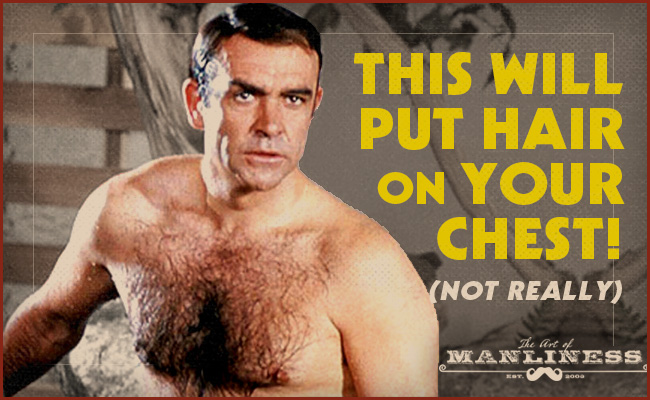
10 Things That Will Put Hair on Your Chest

In the link below Brett McKay, creator of the Art of Manliness, highlights ten of the most common things we were told as boys would put hair on our chests (but actually don’t). We hope it will help further the tradition of benign parental cons (i.e., Santa Claus, tooth fairy, “your face will stay that way if you make it for too long,” etc., etc.).

LINK

Via: Art of Manliness

Wednesday, October 25, 2017

A Lazy Person's Guide to Happiness

Find the right environment, and very little effort is necessary.

"After publication of his 2008 book Blue Zones: Lessons for Living Longer From the People Who’ve Lived the Longest, he launched a company of the same name that works with local communities to integrate health-based changes. I first talked to Buettner at the Aspen Ideas Festival a couple years ago, where he was one of the few people in jeans and a T-shirt. While most people there were sitting listening to interviews and panel discussions, he texted to see if I wanted to cut out and go mountain biking.
I couldn’t, because I have a job. Buettner’s job is to find and hang out with the healthiest people in the world. When we did sit down, he told me about how he was working with Gallup on finding a way to identify the statistically “happiest” people in the world. This month that work is published as the third book in the series, The Blue Zones of Happiness."

LINK

Via: The Atlantic

The IQ test has a dark history

"Since its invention, the IQ test has generated strong arguments in support of and against its use. Both sides are focused on the communities that have been negatively impacted in the past by the use of intelligence tests for eugenic purposes.
The use of IQ tests in a range of settings, and the continued disagreement over their validity and even morality, highlights not only the immense value society places on intelligence — but also our desire to understand and measure it."

LINK

Via: The Week

Tuesday, October 17, 2017

25 Benefits of Adopting a Rescue Dog

October is Adopt a Shelter Dog Month; here are 25 benefits of adopting a shelter dog.

 LINK

Via: Mental Floss

Wednesday, March 5, 2014

18 Things Highly Creative People Do Differently


While there's no "typical" creative type, there are some tell-tale characteristics and behaviors of highly creative people. Here are 18 things they do differently.

Link

Via: HuffPost

Wednesday, April 6, 2011

FBI wants public to help break murdered man's code

The meanings of Ricky McCormick's coded notes remain a mystery to this day
A lifelong fan of codes, Ricky McCormick wrote out two pages of letters, numbers and symbols and stuck them in his pocket. His body was found in a Missouri cornfield in the summer of 1999, those two sheets of paper still in his pants.

ALPONTE GLSE - SE ERTE, one line read. Is that a coded plea for help? A reminder to pick up the laundry from the cleaners? The beginnings of a commentary on the weather in St. Louis?

If you know, the FBI's top code-breaking unit wants your help in breaking McCormick's code — one that has baffled government cryptologists for more than a decade — and perhaps solving his murder.

LINK

Via: Physorg.com

Friday, February 18, 2011

9 Ways to Hack your Brain to Think Faster

Lets face it, the brain is basically a biological computer. It needs food, it needs oxygen, it needs exercise. You can take steps to improve the power of your brain, in effect it’s about improving, modifying, hacking the brain. OK, we may not get to the level of Einstein, but no reason why you can’t be getting the best out of what you have got.

LINK

Via Geek With Laptop

Thursday, February 10, 2011

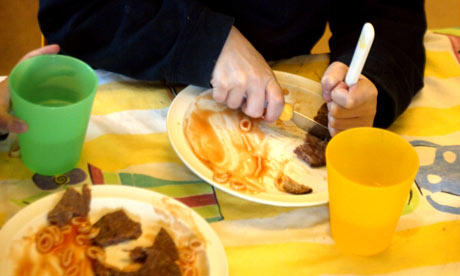
Poor diets may lower children's IQ

Nursery child eating lunch. Photograph: Graham Turner
Diets high in fat, sugar and processed foods are lowering children's IQ, a new study suggests. The report says that eating habits among three year olds shapes brain performance as they get older.

LINK

Via: guardian.co.uk

Tuesday, January 4, 2011

Seven Tricks to Help You Fall Asleep Faster

Fall Asleep Faster
Blissful sleep is that rejuvenating, recharging repose in which about one-third of our lives is (hopefully) spent. When sleep is elusive, try one of these tactics to help drift into dreamland faster.

LINK

Via: Divine Caroline

Wednesday, October 6, 2010

You Already Have the Life You Want

Love the life of your dreams
Here’s an idea: you already have the life you’ve always wanted. In fact, you’ve always had it. Confusing, I know. Most people don’t distinguish between the life that they actually want and the one they think they want.

Link

Via: Pick the Brain

Wednesday, September 29, 2010

Tricks Our Minds Play On Us

Photoshopped Tiananmen Square protest
Our brains are incredibly complex organs that allow us to comprehend both our surroundings and abstract concepts. Unfortunately, because our minds have to process so much information at once in order to help us understand things, they can also be easily tricked. Here are a number of ways your brain not be as reliable as you like to think.

LINK

Via: Neatorama

Monday, August 2, 2010

3 Universal Goals to Influence People


The art and science of persuasion is often discussed as though changing people's minds is about using the right arguments, the right tone of voice or the right negotiation tactic. But effective influence and persuasion isn't just about patter, body language or other techniques, it's also about understanding people's motivations.

LINK

Via: PSYBLOG

Friday, July 30, 2010

Recipe for Longevity: No Smoking, Lots of Friends

Elie Bernager / StockImage / Getty Images
A healthy social life may be as good for your long-term health as avoiding cigarettes, according to a massive research review released Tuesday by the journal PLoS Medicine.

LINK

Via: Time

Wednesday, May 12, 2010

5 Cheap Magic Tricks Behind Every Psychic

f you had incredible psychic powers that could change the course of science and history how would you use them?<br />How about bending cutlery?
I got into magic at the age of five. I stopped thinking psychics were real at the age of five-and-a-half. Mainly because most of them were doing tricks I had just read in the colorful magic book I had bought for three dollars the week before.

Somehow these people had been able to turn the sentence "Here's a neat trick that will amuse your family and friends" into "Here's a way to pretend you have God-like powers and convince crowds of credulous and needy people to give you their money." For them, that three dollar book certainly paid for itself.

If you want to follow their lead, allow me to present five things you must do if you want to use your cheap magician skills to convince the world you have real psychic powers.

LINK

Via: Cracked

Thursday, March 4, 2010

DARPA Brings Our Comic Book Fantasies to Life

The Human Assisted Neural Devices (HAND) Program
When the Defense Advanced Research Projects Agency (DARPA) was founded in 1958, its primary mission was to make the Commies stain their Party-issued boxers. The Soviet Union has since fallen, but DARPA has grown. It has matured. And, like anyone poised on the brink of manhood, it's read a lot of graphic novels.

LINK

Via: Asylum

DARPA Website

Thursday, February 25, 2010

15 Rule-Breakers that Make Perfect Role-Models for Today’s Men

Rule-Breakers that Make Perfect Role-Models
There have been many great men over the centuries, and though most of them weren’t exactly known for authority-bucking attitude, there were exceptions. Some of them have been nothing short of absolute outlaws; wanted and hunted by a ruling party somewhere, while praised and hidden by others. Some of these men were public figures, some liked their privacy, and some found themselves forced into the limelight for their beliefs. They come from all walks of life the world over, but they are recognized just the same — these are 15 rule-breakers that make for perfect role-models for today’s men.


LINK

Via: Manolith

Wednesday, January 13, 2010

25 Famous Thinkers and Their Inspiring Daily Rituals

Many find it interesting to glimpse inside the lives of famous thinkers in an effort to understand where such thought and intelligence is rooted. In that vein, here is a peek into the routines and rituals that writers, philosophers, and statesmen have depended on to keep their work on track and their thoughts flowing. Whether you need inspiration to make it through the next college semester or are working on a future best-selling novel, explore these daily rituals you may want to incorporate into your life.

LINK

Via: Online College

Wednesday, January 6, 2010

Synthetic Alcohol Gives Drinkers a Buzz Minus the Hangover, Addiction

synthetic alcohol. Prost! senator86
Still feeling the sting of New Year's Eve all these days later? A synthetic alcohol substitute developed from chemicals similar in composition to Valium could give users the pleasant feelings of tipsiness without affecting the parts of the brain that lead to barroom brawls, crippling addiction, and sleeping in your car.

LINK

Via: Popular Science

Tuesday, January 5, 2010

When Fear Makes Us Superhuman

Extreme Fear: The Science of Your Mind in Danger by Jeff Wise
The following is an excerpt from Extreme Fear: The Science of Your Mind in Danger by Jeff Wise, published on December 8 by Palgrave Macmillan (Scientific American is a Macmillan publication). Extreme Fear explores the neural underpinnings of this powerful and primitive emotion by relating instances in which people were forced to act under duress and presenting the latest findings from cognitive science. In the following passage from the chapter
entitled "Superhuman" a seemingly ordinary man performs an extraordinary feat of strength to rescue a cyclist who has been run over by a car.

LINK

Via: Scientific American